


It seems like every car owner in America has been taught to change the oil every 3,000 miles, but motor oil (and cars) have become increasingly efficient since that guideline first became common knowledge. Unless your car is subjected to unusually intense use—maybe it regularly tows a lot of weight or performs in extreme temperatures—follow the recommendation in your owner’s manual, which is typically between 5,000 and 7,500 miles.
You can have your cabin air filter changed at your local dealership or your favorite mechanic shop at costs that can range anywhere from $50 to $100. If you’re feeling ambitious — or maybe cheap — you can do it yourself for about half that amount, for the cost of parts only. Cabin air filters often are located behind the glove box and are easily accessible by freeing the box from its fasteners. (Again, consult your owner’s manual on this.) You may be surprised — perhaps even disgusted — at what you find clinging to your filter, from leaves and twigs and grime, and maybe even dead bugs. Ew! But, hey, look at it this way: Better in your cabin air filter … than up your nose!
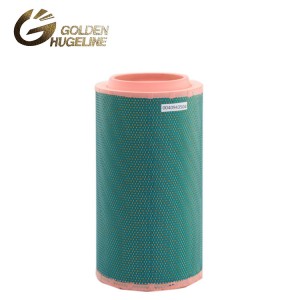
Like all life needs air, all life also needs fuel to move. Your car needs fuel to keep moving, and clean fuel at that. From the petrol transports to the tank of your car, all sorts of muck get sucked up towards the engine. To prevent that fuel from clogging your carb or making it into your combustion chambers there is a fuel filter to block unwanted items. Those foreign objects build up and can restrict or block the flow of fuel to your engine. To prevent this, fuel filters should be changed every 20,000 to 40,000 miles (sooner if you drive on gravel or dirt). To be on the safe side, you might consider swapping filters next time you bring your car into the shop.
After the urgency of the Golf R, these might seem rather anaemic, though, which is why Audi’s 362bhp (later to be 395bhp) RS 3 might hold more appeal for those after a performance-focused experience. Yet while the RS 3 is beautifully built and well kitted out, it’s also costly to buy and run, with second-hand prices starting at £30,000.
The choice of materials is nice, with soft leather, injection-moulded squishy plastic on the doors, dash and console, nice wood accents along the dash and upper doors and plenty of stitching. The pentagonal, silver-rimmed air vents are also a nice design.
as per the product type. The report also includes details about the market share procured by every type and the forecast valuation.
Get access to sample reports as this here: https://marketresearchpro.net/global-automotive-cabin-air-filter-market-professional-survey-report-2018/
We are grateful to you for reading our report. If you wish to find more details of the report or want any customization, contact us. You can read a detailed index of the entire research here: {link}. If you have any special requirements, please let us know and we will offer you the report as you want.
High-end filters can be expensive if you don’t already have one in your home, but the good news is you can make one for a fraction of the cost in just a few easy steps.
The fire broke out underneath a carriage at Brockenhurst Station, and passengers could see smoke billowing over the platform.
Based on the product, the report will provide a valuation in the Automotive Cabin Air Filter market, that will include sales volume, revenue, product price, market share and growth rate of each type:
Marco Wolf, a professor at the University of Southern Mississippi who’s researched DIY consumers, said you give you’ll save your friend or loved one more than just money if you gift them a DIY class. They will also feel empowered and become part of a broader community of craftspeople. Wolf’s handy himself. “If I have problem, I’m not getting a handyman. I’m fixing it myself.”
Future of the Automotive Cabin Air Filter Market: 2018-2025 Forecast and Size Analysis | Air Filter Replacement Related Video:
, , ,